
The Overwhelm of a Fresh Diagnosis
Because the pit you fall into after a diagnosis is real… and it doesn’t get talked about nearly enough.
Last year, I got my diagnosis. After almost a decade of symptoms I’d quietly normalised, minimised, and apologised for, a GP finally listened. And I remember sitting with it afterwards and thinking: okay. There’s a name for this now. That should feel like something.
It did feel like something. Just not what I expected.
For me it was adenomyosis, a condition where the tissue that normally lines the uterus grows into the muscle wall itself, causing chronic pain, heavy periods, fatigue, and a whole cascade of things I had no idea were related. There’s suspected endometriosis too, which is its own ongoing chapter. But this isn’t really an article about either of those things specifically. It’s about what happens in the weeks and months after you finally get told what’s been going on inside your body. Because I’ve since spoken to friends and family with completely different diagnoses, autoimmune conditions, mental health diagnoses, chronic disease and so many of them described the same aftermath.
That strange, swirling pit of grief and loss and validation, all at once.
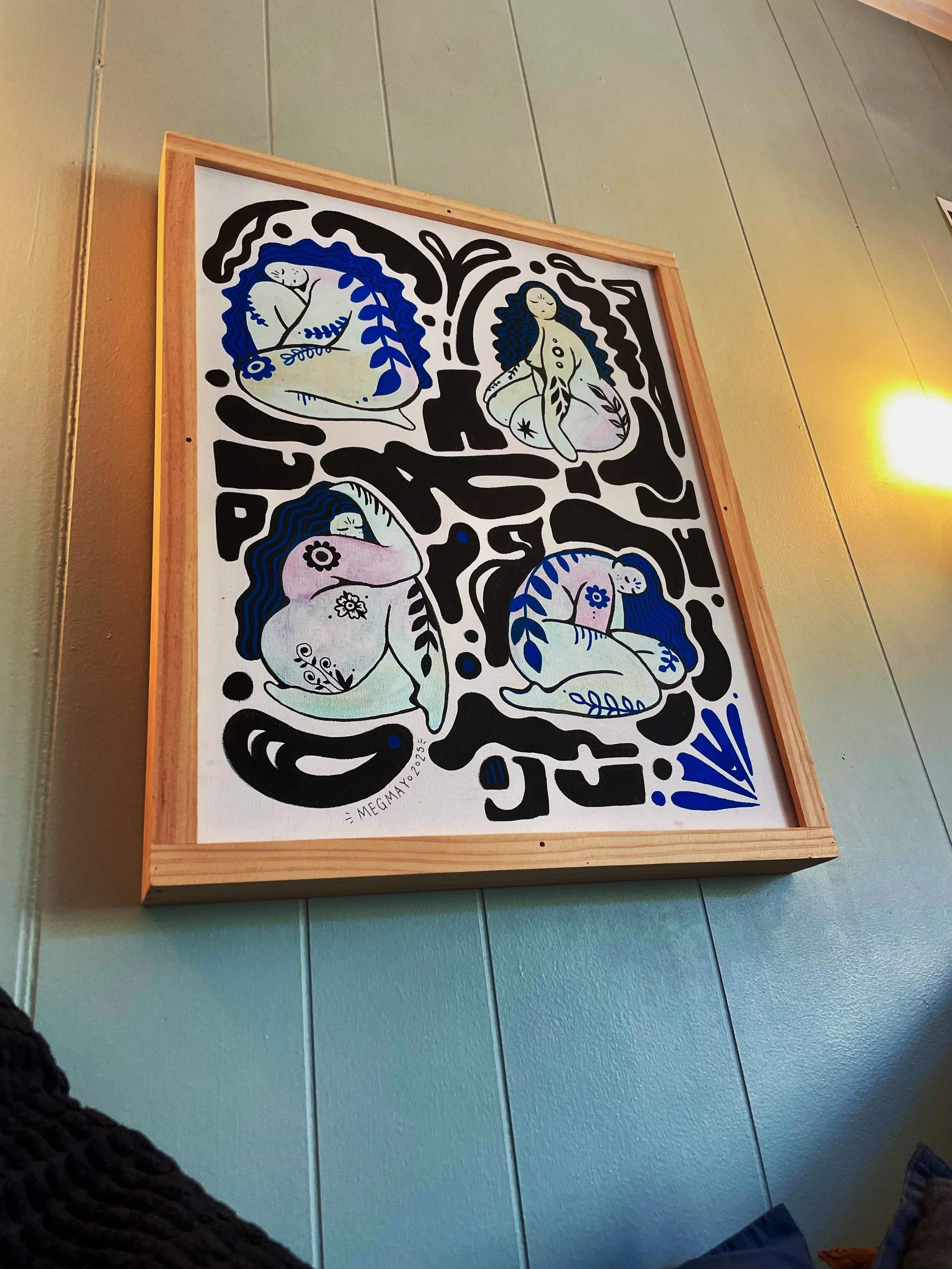
A piece I created in the weeks following diagnosis.
Me vs me, everyday
I basically disappeared for a couple of months after my diagnosis. Not dramatically, I didn’t even really realise I was doing it. I just went quiet. Cancelled plans. Didn’t have a lot to say. I was in the middle of a fight with myself that I didn’t know how to explain to anyone else yet.
Because that’s what it felt like, honestly. Me vs me, every day. One part of me saying you finally have answers, and another part of me absolutely not coping with those answers. Relief arguing with grief. Validation wrestling with something that felt a lot like loss. And in the middle of all of it: the strange performance of continuing to exist normally while none of it felt normal at all.
At work, at social things, even just in everyday conversations, it can feel like masking. Like you’re managing something enormous underneath the surface while presenting a version of yourself that’s fine, that’s coping, that doesn’t need anything. That performance is exhausting in a way that’s hard to explain to people who haven’t done it.
It’s not just the condition that’s invisible. Sometimes it’s everything you’re carrying around it.
And the mental load of it lands everywhere at once. Relationships shift in small ways you don’t quite anticipate. You’re either over-sharing or saying nothing, and neither feels right. The anxiety that was always background noise suddenly has a specific shape. Work becomes harder, not always physically, but the mental weight of navigating it, of wondering what to say and to whom, of having days that don’t come with visible explanations.
“You finally have the word for it. And somehow that makes it more real, and more heavy, and more yours, all at the same time.”
The grief nobody names
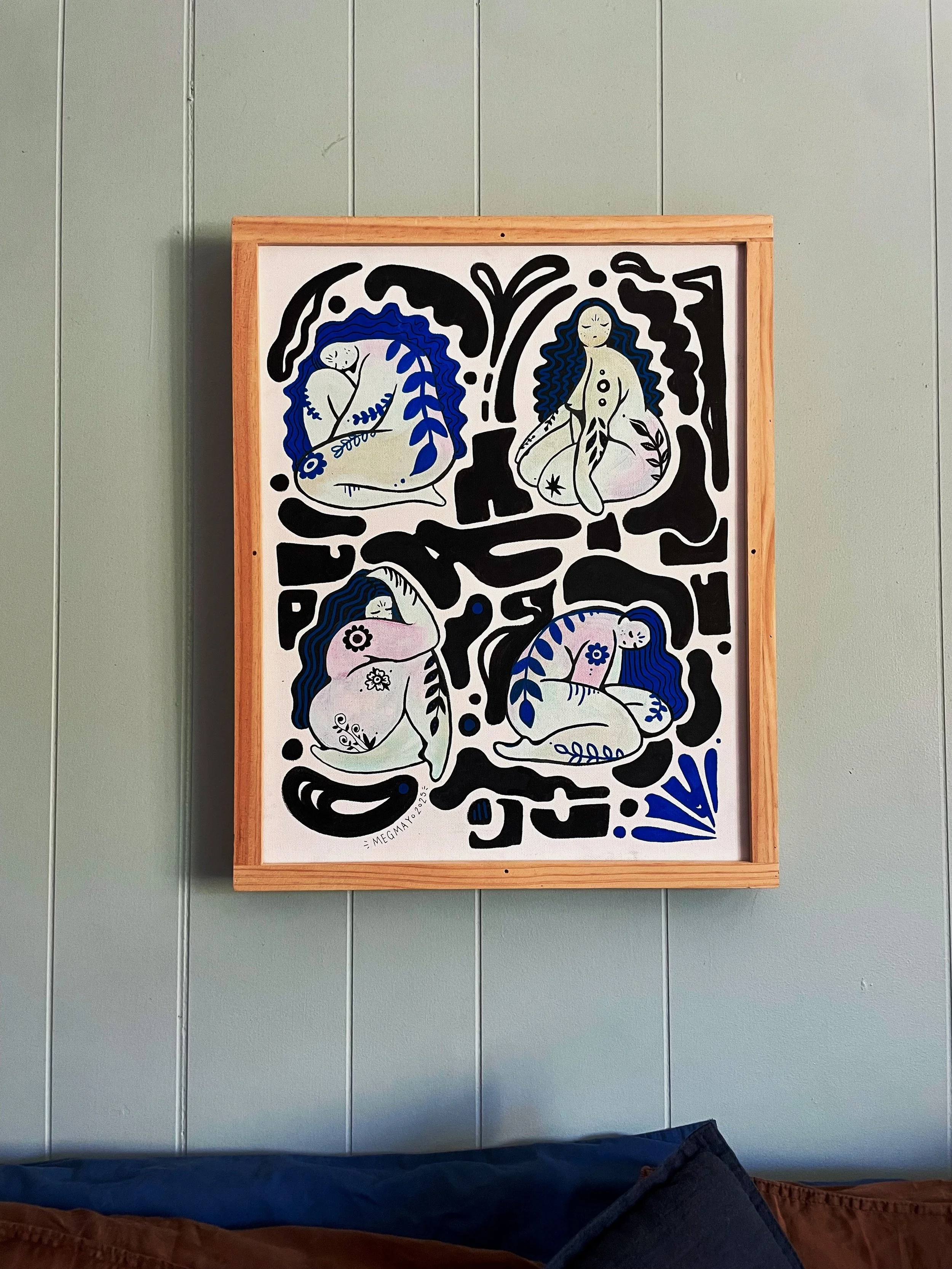
Here’s what I think happens… and why it seems to happen across so many different diagnoses: there’s a version of your life that quietly ends when you get that news. The version where this wasn’t true. Where you didn’t have to think about this. Where your body was just uncomplicated.
Grieving that version doesn’t mean you’re being dramatic. It doesn’t mean you’re not coping. It just means you’re human, and you’re processing a real loss, even if nobody around you can see exactly what’s been lost.
And then alongside the grief, there’s the validation. Which is its own complicated thing. Because part of you feels vindicated, I wasn’t imagining it, I wasn’t being weak, something was genuinely wrong and that relief is real and important. But it can sit uncomfortably next to the sadness. Like you’re relieved and furious and grateful and exhausted all in the same afternoon.
That’s not contradictory. That’s just what this is.
What I’ve learned about leaning on people
For a while, I sat with all of this alone. And it was lonely in a very specific way, the kind that comes from being surrounded by people who care about you but not quite letting any of them in.
What changed things, slowly, was talking. Not to everyone, not all at once, but opening up to the people who could actually hold it. My partner. My mum, my sister. A few close friends. And then something unexpected happened: I started hearing the same story back. Friends and family who had been through their own versions of this: different diagnoses, different circumstances, same pit. The same relief-grief-validation tangle. The same disappearing act.
Once you open yourself up, it’s not lonely at all. That’s been one of the most important things I’ve learnt. The support was there; I just had to stop performing okayness long enough to let it reach me.
I’m also learning (still learning) to be my own number one supporter. To advocate for myself, to take my own experience seriously, to stop waiting for external permission to rest or struggle or not be okay. That one’s harder. It’s a daily practice more than a lesson you learn once.
You can’t pour from an empty cup, and you can’t support yourself if you won’t admit you need it.
Where I’m at now
Still figuring it out, honestly. I don’t have a tidy resolution to offer you. Some days I manage it well; some days I don’t. Some days the only thing that helps is channelling what I’m feeling into something, for me, that’s drawing, making, creating. Turning the hard stuff into something I can look at from the outside. It doesn’t fix anything, but it helps me understand what I’m carrying, and sometimes that’s enough.
I built this project, in part, because of that instinct. The belief that expression, art, illustration, storytelling can get closer to the truth of an experience than a clinical explainer ever could. That sometimes you need to see your experience reflected back at you before you can make sense of it.
If you’re in that early fog right now, the quiet disappearing, the 2am rabbit holes, the strange combination of finally knowing and not knowing what to do with knowing, I just want you to hear this: you don’t have to be okay yet. You don’t have to have figured out the narrative. You’re allowed to be in the middle of it for as long as the middle takes.
This space is for that. You belong here.
Things That Helped
Not medical advice, just stuff that helped.
Give yourself permission to not be okay immediately. There is no timeline for processing a diagnosis, and the pressure to ‘move forward’ too quickly is real but unhelpful.
You don’t have to tell everyone at once, or at all. Start with the one person you trust most and let it expand from there at your own pace.
Let people in, even when it feels hard. The support is often already there; you just have to stop performing wellness long enough to receive it.
Write it down if you can’t say it out loud. A voice note, a note in your phone, a message you never send. Getting it out of your head in any form helps.
The 2am rabbit holes are normal, but try to set limits. Reading everything at once is overwhelming. Bookmark things for later. Give your nervous system a break.
Grief and relief can coexist. You’re not being dramatic. You’re not ungrateful for finally having answers. Both things are real and both are allowed.
Find your people. Online communities, people who share your diagnosis, sometimes the most healing thing is just someone saying ‘me too’ who actually means it.
Channel it into something when you’re ready. Art, movement, writing, gardening, whatever your thing is. Creating something, anything, can help externalise what feels impossibly internal.
You don’t have to carry this alone.
The Quiet Support Project is a free resource for anyone navigating invisible mental and physical health challenges.
If this resonated with you, explore the Toolkit, download the Symptom Cards, or just hang around.
Have a story of your own? We’d love to hear it, thequietsupportproject@gmail.com
The Quiet Support Project | thequietsupportproject.com
