
On Working When Your Body Has Other Plans
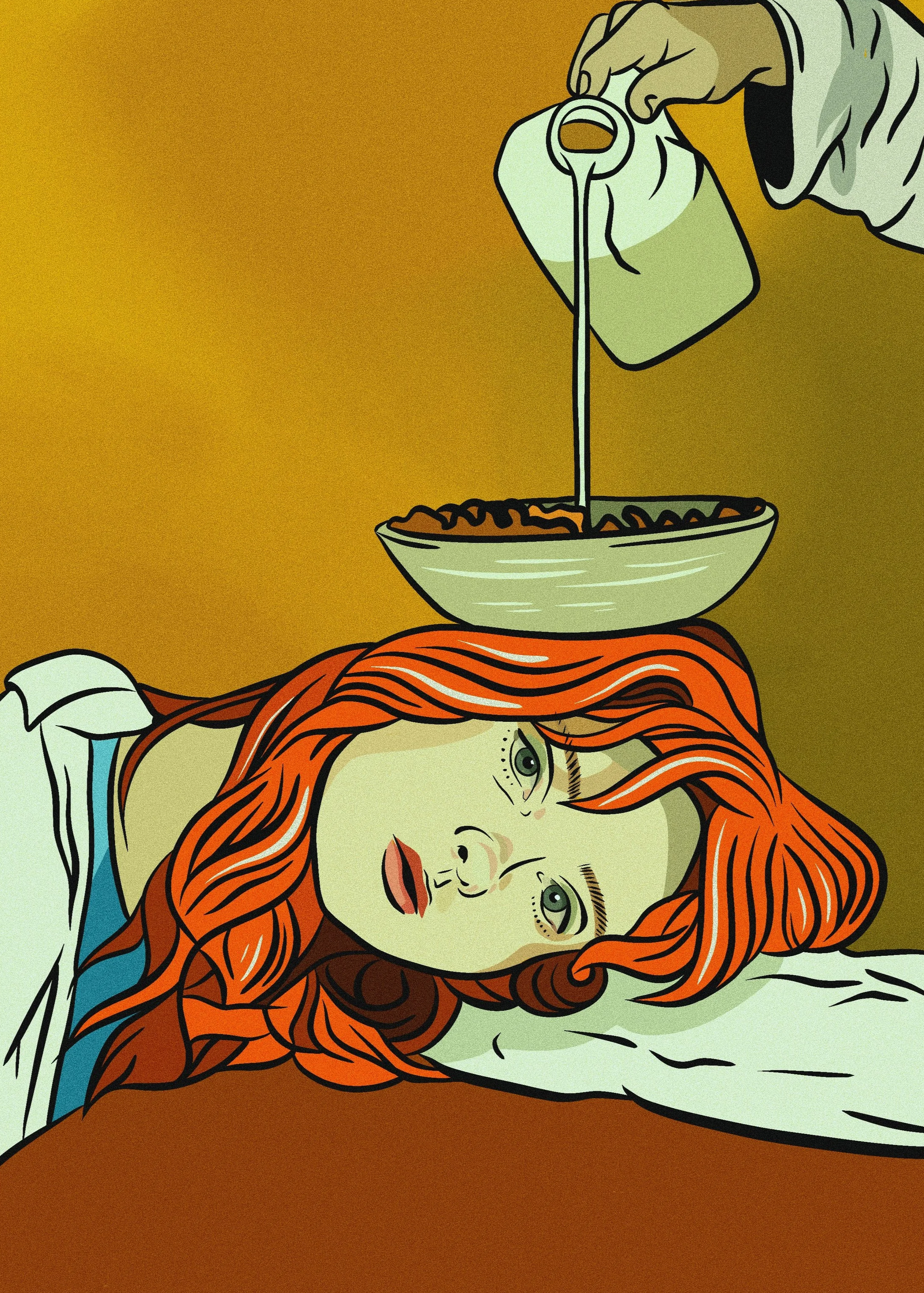
SHOWING UP: A Series About Living with Adenomyosis & Endometriosis
I’m almost a year into being self-employed. Graphic designer, illustrator, freelancer, the person who sends invoices, client meetings and designs fun new ideas. I built this deliberately, piece by piece, around a body that doesn’t always cooperate. And some days I want to burn the whole thing down, not because I don’t love it, I do, genuinely, deeply, but because being a perfectionist with a chronic illness is its own specific kind of exhausting.
Let me explain what a hard work day actually looks like.
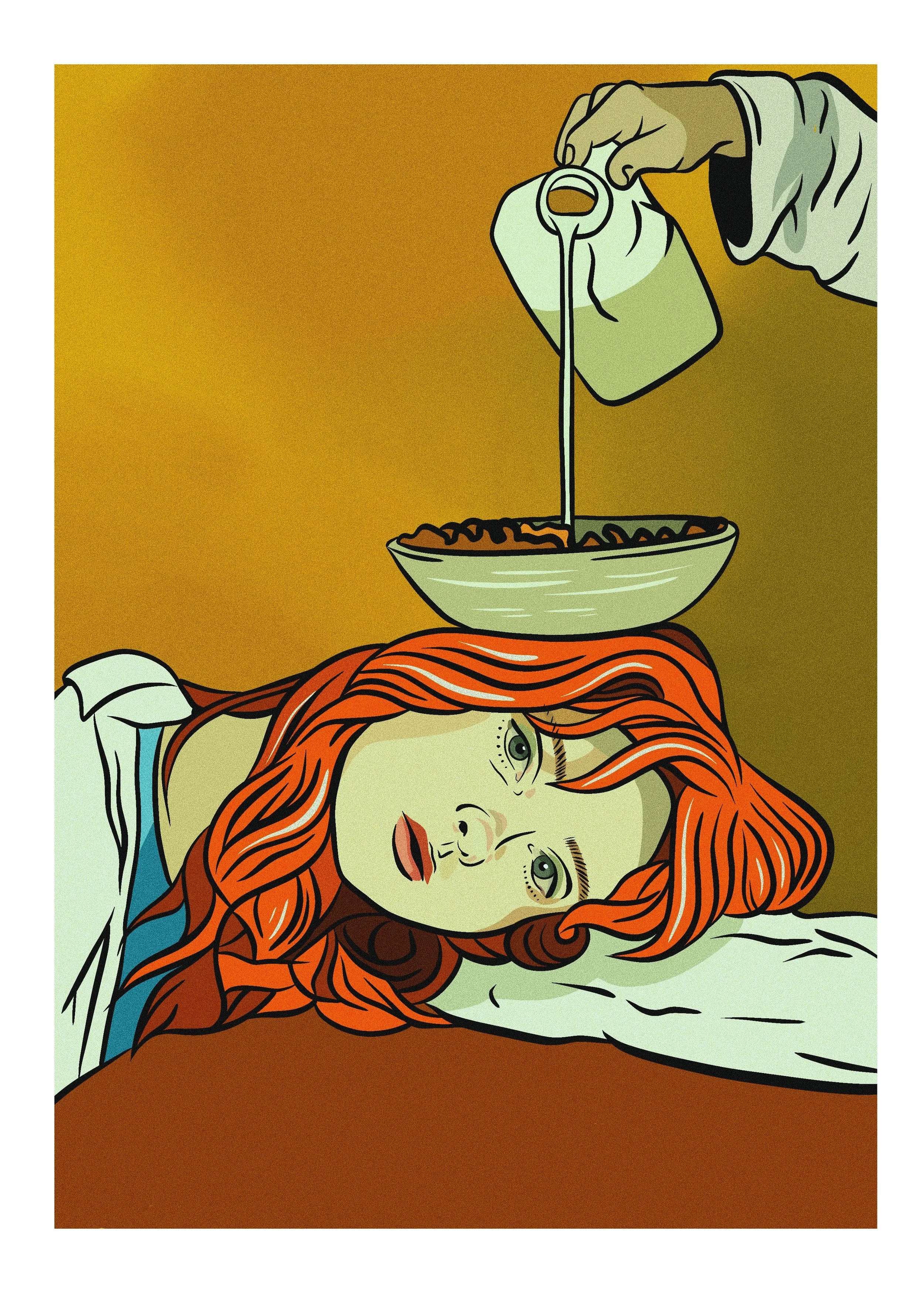
It’s not that I can’t work. It’s that I open a file I was proud of yesterday and I look at it and it feels wrong and I don’t know if it’s actually wrong or if my brain is just operating at sixty percent because my body spent last night staging an event. I redo things I’ve already done. I second-guess decisions that were fine. The perfectionism that makes me good at my job becomes, on those days, a very loud voice telling me that everything I’m producing is mediocre and maybe I’m not cut out for this, my clients think I’m sensitive and maybe I should just…
And then I close the laptop. Make a tea. Come back. And usually it’s fine. Usually the work was fine all along.
This is the thing nobody tells you about chronic illness and creative work: your perception of your own output changes with your pain levels. The work doesn’t get worse on a flare day. Your ability to see it clearly does. That’s not a talent problem. That’s a symptom.
I chose self-employment partly out of love for what I do, and partly out of necessity. A standard nine-to-five in an office, answering to one employer who’s tracking your sick days and your energy levels and your ability to show up identically every single morning, that’s a particular kind of pressure that doesn’t leave much room for a body like mine. Contracting with several different companies means no single client is carrying the full weight of my situation. I’m not the person who is always unwell. I’m just a person, doing good work, managing her own schedule.
The instability is real though. I won’t pretend it isn’t. There’s no sick pay when you’re your own boss. There’s no HR department, no structured support, no colleague covering you. A bad flare week is a bad income week, and that particular anxiety sits alongside the physical stuff in a way that’s its own kind of weight. I’m not going to dress that up as a quirky freelance adventure. It’s hard.
But here’s what the freedom gives me that I wouldn’t trade: I get to choose who I work with.
That sounds simple. It’s not simple. It’s one of the most important things I’ve built this year. I have worked with people who get it, who don’t need a medical certificate to accept that sometimes a deadline needs to shift by a day, who treat me like the professional I am rather than a liability to be managed. And I have quietly stepped back from situations that didn’t feel safe, where I could sense that my needs would be received as inconvenience. Life is too short and my energy is too finite to spend it performing wellness for people who aren’t worth it.
I came here, to this country, to this life abroad, to self-employment, to build something. The illness was uninvited and tried to redraw the blueprints. I’m still building anyway. Slower than I planned, with more rest days than I budgeted for, and sometimes with the TENS machine on under my desk while I’m on a call. But building.
Nearly a year in. That’s not nothing. On the days I want to give up, I try to remember that.
Your work is part of you. Chronic illness can take a lot of things, but it doesn’t get to take the thing you love. You just learn to do it differently, and some days, differently is enough.
On Work, Chronic Illness, and Not Giving Up the Thing You Love
Not prescriptive, everyone’s situation is different. Just things that have helped me.
If your perception of your work tanks on a flare day, try not to make permanent decisions from that place. Close the file. Come back tomorrow. It’s usually better than you thought.
Contracting or freelancing across multiple clients can reduce the pressure of any one employer knowing too much about your health. You spread the load.
Flexible hours are genuinely life-changing if you can access them. Working at 10pm when you’re having a better pain window is still working.
You are allowed to quietly step back from clients or workplaces that don’t feel safe for you. Choosing who you work with is a form of self-care.
Perfectionism and chronic illness are a brutal combination. Try to separate ‘my standards are high’ from ‘I am failing’. They are not the same thing.
If you’re employed rather than self-employed, it’s worth looking into what workplace accommodations you may be entitled to. You don’t have to white-knuckle through a structure that isn’t built for you.
Nearly a year counts. Six months counts. One month counts. Don’t measure your endurance against a healthy person’s timeline.
The Quiet Support Project | thequietsupportproject.com
